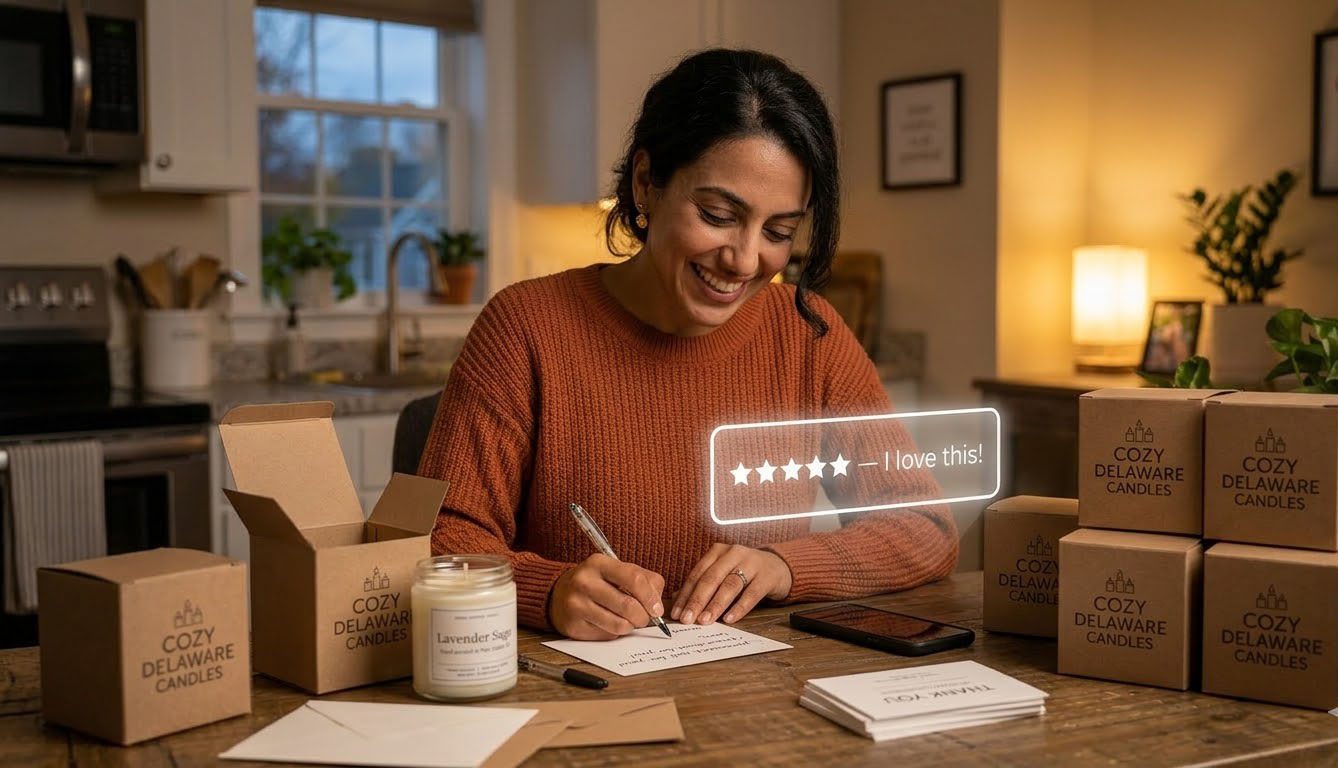
The magic happens after the sale. A 5-email sequence turns buyers into loyal repeat customers.
- The 5-email sequence that builds loyalty (thank you, check-in, bonus, testimonial request, next offer)
- Why timing matters (and when to send each email)
- How to ask for testimonials naturally
- Why this sequence is worth setting up once
- How to actually track and send these emails
Here's what most small business owners do after someone buys: they send a receipt and disappear.
Then they wonder why nobody ever comes back.
The real magic doesn't happen when someone clicks "buy." It happens in the days and weeks after. This is when buyers are paying the most attention to your business, watching to see if you're worth the money they just spent. If you show up and show them you care, they'll buy from you again. If you ghost them, they'll assume you were just after the sale and move on.
The follow-up emails after a purchase are the easiest, highest-return emails you'll ever send. People are already happy with you (they just bought). You don't have to convince them to try something new. You're just making sure they feel smart about their choice and that they get real value from what they bought.
I'm going to walk you through a simple 5-email sequence that takes almost no time to set up but changes how your customers see you.
The 5-Email Post-Purchase Sequence
Email 1: The Thank You (Send immediately)
This goes out the same day they buy, right after the purchase goes through.
Keep it short and warm. Say thank you. Remind them what they bought. Tell them what to expect next (when will they receive it, will they get a confirmation email, etc.).
Don't start selling them something else. That's tone-deaf. They just gave you money. They want to feel good about it.
A simple version: "Hey [Name], I'm so glad you grabbed [product]. You should see an email with your download/shipping confirmation in about 10 minutes. If you have any questions, just reply to this email. Thank you for trusting me with this."
That's it. It's genuine. It's clear. It makes people feel welcomed.
Email 2: The Check-In (Send 3 days later)
By day three, they've had time to try whatever you sold them. Or at least they've thought about it.
This email asks: How's it going?
Make it genuine. If you sold them a course, ask which lesson they're on. If it's a product, ask if it arrived in good condition. If it's a service, ask how they're feeling about the results so far.
You're not asking so you can send them a sales pitch next. You're asking because you actually want to know. People can tell the difference.
Sample: "Hey [Name], I wanted to check in and see how you're getting along with [product]. Have you had a chance to dig in yet? And more importantly—is there anything you're stuck on or confused about? Just hit reply and let me know."
The goal here is to catch problems early. If someone's struggling, you can help. If someone's thrilled, that emotion is fresh and real for your next email.
Email 3: The Bonus Tip (Send 7 days later)
A full week in, send them something extra.
This is a tip, trick, or resource that makes what they bought even more valuable. It should be something you already know, not something you have to go find. Maybe it's a tip about how to use the product better. Maybe it's a complementary resource. Maybe it's the answer to a question you know buyers often have.
This email does one important thing: it reminds them why they made a good decision. They already spent the money, so you're not selling. You're proving that you're worth more than what they paid. That's the opposite of how most businesses act.
Sample: "Hey [Name], I was thinking about something most people miss when they're getting started with [product]—they often [common mistake here]. So I put together a quick 3-minute guide that addresses exactly that. [Link]. This should save you some time and frustration. Let me know if it helps."
Email 4: The Testimonial Request (Send 14 days later)
Two weeks out, they've had real time to use what they bought and see if it actually works.
This is when you ask for a testimonial or review.
Here's the key: you're not asking them to write something perfect. You're asking them to tell you what happened. "What was the situation before you bought this? What's different now? What would you tell someone who's thinking about buying?"
I go deeper into this in How to Get Testimonials That Actually Sell, but the short version is: real testimonials come from real people answering real questions about real results.
Sample: "Hey [Name], I'm wondering if you'd be open to sharing your experience with [product]. It would mean a lot to me to know what's changed since you started using it. I'm asking three questions to make it super easy: (1) What was going on before you got this? (2) What's different now? (3) What would you tell someone who's on the fence about buying? Just reply with whatever comes to mind—it doesn't have to be fancy. Thanks."
Email 5: The Next Step (Send 21 days later)
Three weeks out, you introduce them to your next offer.
This could be a complementary product, a service, a course, whatever makes sense for them. But here's what makes this different from typical "here's what else you can buy" emails: you're showing them the next logical step in their journey with you, not just whatever you have to sell.
If they bought a beginner course, maybe the next step is accountability coaching. If they bought your product, maybe it's the advanced version or a bundle. Make it actually relevant to what they just bought.
Sample: "Hey [Name], I'm so glad [product] is working for you. I've been thinking about what people usually want to work on next—and it's usually [next thing]. Some of my happiest customers have moved on to [next offer] after they finished with [product]. If you're interested in exploring that, here's more info: [Link]. No pressure at all—just wanted to make sure you knew it existed."
Why This Sequence Works
Three things happen in this five-email sequence:
First, you're proving you care about the person, not just the sale. Every email is about their experience, not your bottom line.
Second, you're collecting social proof (testimonials) naturally. You're not asking for a favor. You're asking them to describe their results. People like talking about wins they've had.
Third, you're building trust for the next sale. By the time you mention your next offer, they've heard from you five times and felt supported every time. They're not suspicious. They know what you're about.
The Timing Actually Matters
Don't bunch these emails together. The days between emails let people actually have an experience with what they bought. If you send all five emails in the first week, they'll feel like spam even though they're good content.
Stick to the timing: day 0, day 3, day 7, day 14, day 21.
If your customers are in a different timezone or your business has weird timing (like you're only shipping on Tuesdays), adjust slightly. But don't abandon the spacing. The space is intentional.
Setting It Up Is Simple
You don't need fancy automation software for this. Most email platforms (Convertkit, Mailchimp, Substack) have basic automation built in. You write the five emails once, set them to go out on those five dates, and then they run on their own.
New buyer comes in. Five emails follow them automatically. You don't have to think about it again.
If you're really early and you don't have automation yet, you can do this manually. Keep a spreadsheet of purchase dates and a reminder to send each email on the right day. It's not elegant, but it works.
One More Thing: Make It Personal
If you can, personalize each email with their name and what they bought. "Hey Sarah, I'm so glad you grabbed the Email Mastery course" instead of "Hey there, thanks for buying."
It takes an extra thirty seconds per person. It makes them feel seen. And people who feel seen become people who come back.
This sequence isn't complicated. But it's the difference between customers who buy once and forget about you, and customers who stick around because they feel valued. Do this right and your repeat purchase rate will surprise you.
What to Do Next
-
Write out your five emails. Use the samples above as starting points, but make them your own voice. They should sound like you texting a friend about why you're glad they bought something from you.
-
Set up automation. Log into whatever email platform you use and create a workflow or automation sequence for post-purchase emails. Attach it to the "purchase successful" trigger so it starts automatically.
-
Test it yourself. If you can, make a test purchase or have a friend make one, just to see how the emails flow and that the timing feels natural.
-
Go deeper on testimonials. Once you have this sequence running, head over to How to Get Testimonials That Actually Sell to make sure you're asking the right questions in email #4.
-
Learn what to email consistently. Check out What to Email Your List Weekly so your regular emails keep the same warm, helpful tone as this sequence.
Try It With AI
Ready to put this into action? Copy any of the prompts below, paste it into ChatGPT or Claude, fill in the [BRACKETS] with your info, and hit send. You'll have a solid first draft in minutes.
Prompt 1: Write Your Thank You Email:
Write a thank you email that goes out immediately after someone buys [YOUR PRODUCT]. It should: 1) Say thank you genuinely, 2) Tell them what to expect next, 3) Remind them what they bought, 4) Give them one clear next step. Keep it short (100-150 words) and warm.
Prompt 2: Write Your Bonus Tip Email:
Write an email (sending 7 days after purchase) that gives a bonus tip that makes [YOUR PRODUCT] even more valuable. The tip is [DESCRIBE YOUR BONUS TIP]. Make it feel generous, like you’re sharing insider info. 150-200 words. The goal is to prove they made a good decision.
Prompt 3: Write Your Testimonial Request:
Write an email (sending 14 days after purchase) asking for a testimonial. Instead of asking them to write something formal, ask three specific questions: 1) What was your situation before [product]?, 2) What’s different now?, 3) What would you tell someone on the fence? Make it feel like you’re just curious, not like you need something from them.
The follow-up emails after a purchase are where real loyalty is built. People who feel cared for come back. People who feel ghosted don’t.
