
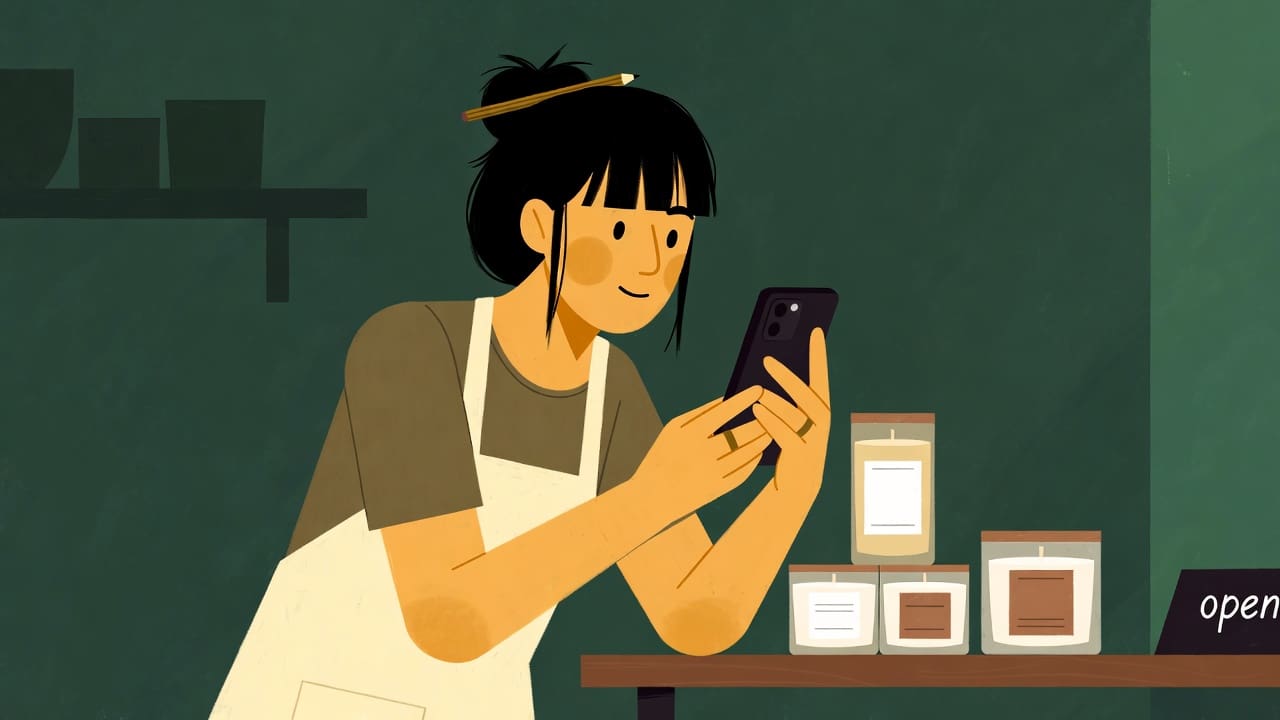
You don’t need thousands of followers to have a successful launch. You need the right people paying attention. Here’s how to make that happen.
-
Redefine what success looks like
-
Apply the tiny audience launch framework
-
Learn what to do after the launch
-
Apply the action step
How to Launch Something When You Have a Tiny Audience
You have something to sell. Maybe it is a new product, a service package, an online course, or a digital download. You have put in the work to make it good. And now it is time to launch.
But your email list has 47 people. Your Instagram following is 300 (half of whom are friends and family). You do not have a massive audience, a PR team, or a marketing budget. The big launch playbook — with countdown timers, affiliate programs, and webinar funnels — feels like it was written for a completely different universe.
Here is what you need to hear: you do not need a big audience to have a successful launch. You need a clear offer, a simple plan, and the willingness to talk to real people. Some of the best first launches happen with fewer than 100 people paying attention.
Redefine What Success Looks Like
The first thing to do is adjust your expectations — not down, just realistic.
A launch to a tiny audience is not going to look like an internet celebrity selling out a course to 10,000 people. And it does not need to. A launch that brings in ten new customers, validates your offer, and gives you real feedback is a wildly successful first launch. It proves the concept, generates revenue, and gives you momentum to build on.
The pressure to have a “six-figure launch” right out of the gate has caused more people to never launch at all than it has helped. So let go of that benchmark. Your first launch is not a performance — it is a proof of concept.
The Tiny Audience Launch Framework
Here is a simple five-step framework that works whether you have 50 followers or 500.
Step 1: Warm your audience before launch day.
Do not spring a new offer on people out of nowhere. In the two weeks before your launch, start talking about the problem your product or service solves. Not selling — just talking.
Share a story about why you created it. Ask a question on social media related to the problem. Send an email that says “I have been working on something and I am excited to share it soon.” Post a behind-the-scenes photo of the process.
This does two things. It builds anticipation among the people who are already paying attention. And it primes them to see the offer as a natural next step, not a random pitch.
Step 2: Make the offer crystal clear.
When launch day arrives, your message needs to be simple enough that someone could repeat it back to you after hearing it once.
What is it? Who is it for? What result does it deliver? How much does it cost? How do they get it?
That is it. If it takes more than five sentences to explain your offer, it is too complicated. Simplify the message, not the product.
Write this out before launch day and use the exact same language everywhere — your email, your social media posts, your website. Consistent messaging is even more important when your audience is small because every touchpoint matters.
Step 3: Email first, post second.
Your email list — even if it is tiny — is your most powerful launch tool. The people on your email list have already raised their hand and said “I want to hear from you.” They are warmer than any social media follower.
Send an email on launch day that tells the story behind the offer, explains exactly what it is, and includes a clear link to buy or book. Keep it personal. Write it like you are talking to one person.
Follow up with a social media post (or a few, spaced throughout the day). But do not rely on social media alone. The algorithm decides who sees your posts. Email goes directly to the inbox.
Step 4: Follow up more than you think you should.
Most people will not buy from the first message they see. Not because they are not interested — because they got distracted. Their phone buzzed. A kid started crying. They told themselves “I will come back to this later” and forgot.
During your launch window (three to seven days is ideal for a small launch), send at least three emails. The first announces the offer. The second shares a testimonial, answers a common question, or tells a related story. The third reminds people the offer is available and gives them a gentle nudge.
This is where most small business owners back off. One email feels like enough. Two feels like pushing it. Three feels like too many. But the data consistently shows that the second and third emails convert more people than the first. People who were interested but did not act need reminders, not radio silence.
On social media, post about the offer at least once a day during the launch window. Different angles each time — a tip related to the product, a customer quote, a behind-the-scenes moment, a FAQ. Repetition feels awkward to you because you see every post. Your audience does not.
Step 5: Use personal outreach.
This is the most underused and most effective launch tactic for small audiences. Send direct messages or personal emails to ten to twenty people who you genuinely think would benefit from your offer.
Not a copy-paste sales pitch. A real, personal message. “Hey, I know you mentioned you were struggling with [problem]. I just launched [product] that is specifically designed to help with that. Wanted to make sure you saw it. No pressure — just thought of you.”
Personal outreach feels uncomfortable. It also converts at rates that no social media post or email broadcast can match. When you have a small audience, every conversation counts, and one-to-one messages are conversations.
What to Do After the Launch
Your launch window is over. Whether you sold three or thirty, here is what happens next.
Celebrate the wins. Every sale from a first launch is validation that your offer works. Even one paying customer proves that a stranger (or near-stranger) valued your work enough to pay for it.
Gather feedback. Ask your buyers what they thought. Ask the people who did not buy why they passed. This information is gold for improving the offer and the messaging for next time.
Keep selling. The launch window is a concentrated effort, but the offer does not have to disappear. Keep it available. Mention it in your regular content. Add it to your email signature. Link to it on your website. A product that is always available sells more over time than one that only exists during a launch event.
Plan the next one. Your second launch will be easier because you will have testimonials, feedback, and experience. And your audience will be slightly larger. Each launch compounds on the last.
The Action Step
If you have something ready to launch — a product, a service, a package — pick a launch date within the next two weeks. Write out your offer in five sentences or fewer. Draft the first launch email. Identify ten people you will personally reach out to.
Then do it. Do not wait for a bigger audience. Do not wait for perfect conditions. Launch with what you have, learn from what happens, and build from there.
Every big business you admire started by selling to a small group of people who believed in them early. Your tiny audience is not a limitation. It is a starting line.
Try It With AI
Ready to put this into action? Copy any of the prompts below, paste it into ChatGPT or Claude, fill in the [BRACKETS] with your info, and hit send. You will have a solid first draft in minutes.
Prompt 1: Summarize the offer in 5 sentences or fewer:
I’m launching [WHAT YOU’RE LAUNCHING – product/service/course] and I need to summarize my offer in 5 sentences or fewer for my launch messaging. Here’s what I’m offering: [DESCRIBE WHAT IT IS, WHO IT’S FOR, WHAT RESULT IT DELIVERS, AND THE PRICE]. Can you help me write this in a clear, compelling way that a 10-year-old could understand? My tone should be [DESCRIBE YOUR TONE].
Prompt 2: Draft the first launch email:
I’m launching [WHAT YOU’RE LAUNCHING]. Here’s my offer summary: [PASTE YOUR 5-SENTENCE OFFER]. I want to write a personal, friendly launch email that: 1) tells a brief story about why I created it, 2) explains what it is and who it’s for, 3) includes a clear call-to-action with a link, 4) uses my natural tone without being salesy. Can you help me draft this email? My tone is [DESCRIBE YOUR TONE] and I want it to feel like a friend telling another friend about something cool.
Prompt 3: Warm the audience with 2 weeks of pre-launch content:
I’m launching [WHAT YOU’RE LAUNCHING] in 2 weeks and I want to warm my audience with helpful, relevant content before I ask them to buy. My audience struggles with [THE PROBLEM YOUR PRODUCT SOLVES]. Can you give me 10-14 content ideas (1-2 per day) that address this problem? Include the type of content (story, tip, question, behind-the-scenes) and a brief description of what to share. Don’t ask them to buy yet—just build anticipation and show that you understand their problem.
Prompt 4: Follow-up email 2: Share testimonial, answer question, or tell related story:
I’m running a 3-email launch sequence for [WHAT YOU’RE LAUNCHING]. My first email announces the offer. For my second email, I want to: [CHOOSE ONE: share a testimonial from a beta user, answer a common objection/question, or tell a story related to why I created this]. Here’s what I know: [SHARE RELEVANT DETAILS – e.g., testimonial quote, common question, related story]. Can you help me write this email in a natural, friendly tone that doesn’t feel pushy?
Prompt 5: Follow-up email 3: Reminder with gentle nudge:
This is the final email in my 3-email launch sequence for [WHAT YOU’RE LAUNCHING]. I want to remind people the offer is available and give them a gentle nudge to act. I’ll mention [OPTIONAL: a limited-time element, a specific benefit, a final objection-handler]. Can you write this email to feel like a caring reminder from a friend, not a pushy sales email? Keep it friendly and conversational.
